
What if one water treatment choice could cut your repair bills? Knowing the types of corrosion inhibitors makes that possible. Corrosion costs the world about US$2.5 trillion each year, says AMPP’s IMPACT study.
UAE heat and humidity push that risk even higher. The right boiler corrosion inhibitor keeps steam systems safe and running. This guide explains each option in plain words. You will learn how they work, where they fit, and how to choose well.
Why Corrosion Hits UAE Plants Hard
UAE plants run in tough conditions. Summer heat often passes 45°C. Coastal sites deal with humid, salty air. Many plants use desalinated make-up water, which is soft and can attack metal.
Cooling towers lose water to evaporation, so salts build up fast. Boilers face dissolved oxygen and carbon dioxide in feed water. Left alone, these problems cause pitting, leaks, and forced shutdowns. A good inhibitor program slows metal loss and extends equipment life.
Signs Your System Needs Better Protection
Corrosion often shows early warning signs. Watch for these:
- Red-brown or cloudy water in the system
- Pinhole leaks in pipes, tubes, or heat exchangers
- Rising iron or copper levels in water samples
- Frequent chemical top-ups with little result
- Deposits or scale on heat transfer surfaces
- Drops in heat transfer or cooling performance
Five Main Inhibitor Groups Used in Industry
Each group protects metal in a different way.
- Anodic inhibitors: Nitrite, molybdate, and orthophosphate form a thin film on anodic metal spots. Low doses can cause deep pitting, so dose with care.
- Cathodic inhibitors: Zinc and polyphosphates slow the reaction at cathodic spots. They are common in cooling water.
- Mixed inhibitors: Phosphonates and silicates protect both areas at once.
- Organic filming inhibitors: Amines coat the metal with a thin water-repelling layer. They suit steam and condensate lines.
- Volatile inhibitors: Vapors protect closed spaces. They help during storage and shutdown.
How Each Types Of Corrosion Inhibitors Works
These types of corrosion inhibitors work in one of two ways. Some build a thin protective film on the metal. Others change the water chemistry so the metal reacts less. Anodic and cathodic products each target one reaction spot. Mixed products cover both. Organic products add a barrier layer.
No single product suits every system. Metal type, water quality, temperature, and pressure all matter. Copper alloys, for example, need azole products such as tolyltriazole alongside steel protection.
Boiler Corrosion Inhibitor Options for Steam Systems
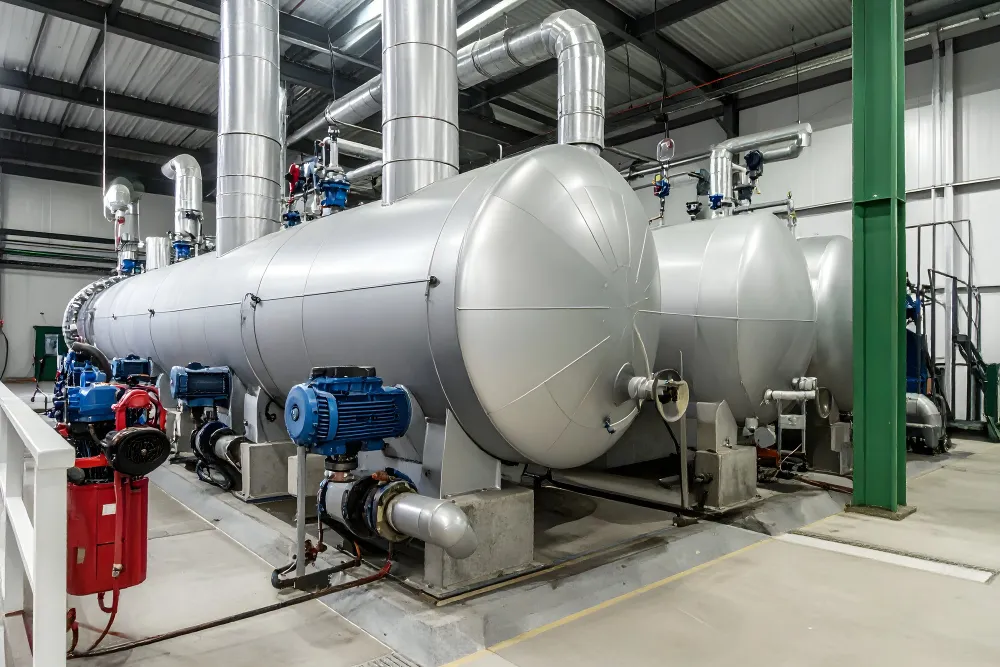
A boiler corrosion inhibitor mainly fights oxygen and acid attack. Dissolved oxygen causes pitting in feed lines and drums. Carbon dioxide forms carbonic acid in condensate lines. Most plants use a blend of products to cover both threats.
- Oxygen scavengers: Sulfite, DEHA, and carbohydrazide remove dissolved oxygen from feed water. Hydrazine is now rare because of health risks.
- Neutralizing amines: These raise condensate pH and stop acid attack in return lines.
- Filming amines: These coat condensate pipes and block oxygen and acid contact.
- Phosphate and polymer programs: These control scale and keep boiler water alkalinity in range.
Cooling Tower Corrosion Inhibitor Programs for Hot Climates
A cooling tower corrosion inhibitor must work in open, warm, oxygen-rich water. Evaporation raises salt levels fast. That speeds attack on steel and copper. Most programs blend phosphonates, zinc or molybdate, and azoles. Polymers keep scale from forming on hot surfaces.
A biocide program is also needed. Microbes and slime create deposits, and corrosion grows under them. Good corrosion control and good microbial control go together.
How to Choose the Right Inhibitor
Start with a full water test. Check pH, hardness, chloride, alkalinity, and dissolved solids. Next, list the metals in your system, such as carbon steel, stainless steel, and copper. Then note your operating temperature and pressure.
Match these facts to the product data sheet. For open towers, ask your supplier which cooling tower corrosion inhibitor suits your cycles of concentration. Track results with corrosion coupons and regular water checks. Adjust the dose when readings drift. Review the whole program at least once a year.
Common Dosing Mistakes to Avoid
Even a good product fails when used the wrong way.
- Underdosing anodic products, which can trigger pitting
- Skipping routine water tests
- Mixing chemicals that do not work together
- Ignoring biocide control
- Starting a new program without cleaning and flushing first
- Using products that are not approved for local use
Standards and Rules Every UAE Plant Should Know
Strong programs follow trusted guidance. The AMPP corrosion control standards cover testing, monitoring, and material protection methods used worldwide. AMPP was formed when NACE International and SSPC merged.
Chemical use in the UAE also follows national and local rules. Review the UAE industrial chemical regulations from the Ministry of Industry and Advanced Technology. Requirements can differ by emirate, so confirm with local authorities.
Using Inhibitors With Other Protection Methods
Inhibitors work best as one layer of a wider plan. Coatings, good design, and regular cleaning all help. To see where these products fit across sectors, read our guide on industrial applications of corrosion inhibitors. For other protection steps, see these industrial rust prevention methods.
When you are ready to buy, look for corrosion inhibitor suppliers in UAE who offer water testing, dosing advice, and safety data.
Conclusion
Understanding the types of corrosion inhibitors helps you cut leaks, downtime, and repair costs. Test your water, match the product to your metals, and follow local rules. Then track results and adjust the dose when needed.
Chemway Chemicals can guide you to the right solution for your plant. Contact the team today to protect your boilers and cooling towers.
FAQs
1. What are the different types of corrosion inhibitors?
They are anodic, cathodic, mixed, organic film-forming, and volatile inhibitors. These inhibitors prevent corrosion in metals in different ways. This depends on the quality of the water and the kind of metals to be protected.
2. Which kind of corrosion inhibitors should be considered in UAE industrial plant applications?
The most suitable corrosion inhibitors that can resist heat and salty environments are phosphonates, zinc, molybdates, and amine mixtures.
3. What is the function of the boiler corrosion inhibitor?
The function of the boiler corrosion inhibitor is to remove dissolved oxygen and increase the pH of condensate.
4. How does a cooling tower corrosion inhibitor work?
It forms a thin film on steel and copper surfaces. Blended with scale control and biocides, it cuts metal loss in warm, salty water.
5. How frequently should inhibitor concentration be measured?
Sample cooling water several times a week and boiler water once daily or during each shift. Measure inhibitor concentration, pH, and conductivity. Evaluate the entire system annually.
