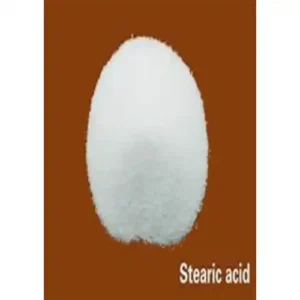
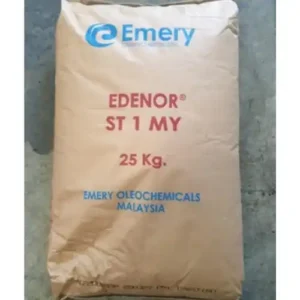
Stearic Acid is widely used across many industries due to its emulsifying, stabilizing, and thickening properties. Here are the primary industrial uses of stearic acid:
- Cosmetics and Personal Care
- Application: Used in creams, lotions, shampoos, conditioners, and makeup products.
- Function: Acts as an emulsifier, thickening agent, and stabilizer.
- Benefit: Improves texture, stability, and consistency, giving a smooth feel to products.
- Products: Moisturizers, shaving creams, deodorants, and foundations.
- Soap and Detergent Manufacturing
- Application: Used in the production of soaps, body washes, and liquid detergents.
- Function: Hardens soap and stabilizes foam.
- Benefit: Creates firm, long-lasting soap bars and enhances foaming action in soaps and detergents.
- Products: Bar soaps, laundry detergents, and dishwashing liquids.
- Rubber Industry
- Application: Used as a softener, release agent, and processing aid in rubber manufacturing.
- Function: Acts as a lubricant, improving the flexibility and processing of rubber.
- Benefit: Enhances the performance of rubber products by making them more pliable and easier to work with.
- Products: Tires, seals, gaskets, and footwear.
- Plastics Industry
- Application: Used as a lubricant, dispersing agent, and release agent in plastic processing.
- Function: Reduces friction during extrusion and molding processes.
- Benefit: Improves the production efficiency and quality of plastic items.
- Products: PVC, polystyrene, and other plastic products.
- Candle Manufacturing
- Application: Added to paraffin wax in candle production.
- Function: Hardens the wax, improves the burning quality, and provides a polished finish.
- Benefit: Creates candles that burn longer, drip less, and retain their shape.
- Products: Candles of various shapes and sizes, including decorative and utility candles.
- Food Industry
- Application: Used as a food additive (E570) in processed foods.
- Function: Acts as a thickener, emulsifier, and stabilizer in foods.
- Benefit: Improves the texture and consistency of foods such as margarine, confectioneries, and processed fats.
- Products: Chewing gum, candy, margarine, and other processed foods.
- Pharmaceuticals
- Application: Used in the production of tablets and capsules.
- Function: Acts as a lubricant and binding agent during tablet compression.
- Benefit: Ensures better compaction and uniformity in pharmaceuticals.
- Products: Tablets, capsules, and topical creams.
- Textile Industry
- Application: Used in the treatment and finishing of textiles.
- Function: Provides a softening effect and improves water repellency.
- Benefit: Enhances the texture, durability, and water resistance of fabrics.
- Products: Waterproof and flame-resistant fabrics.
- Metal Processing
- Application: Used as a lubricant in metal casting and metalworking.
- Function: Reduces friction and acts as a mold-release agent.
- Benefit: Prevents metal components from sticking to molds and machinery during production.
- Products: Molded metal parts, castings, and extrusions.