
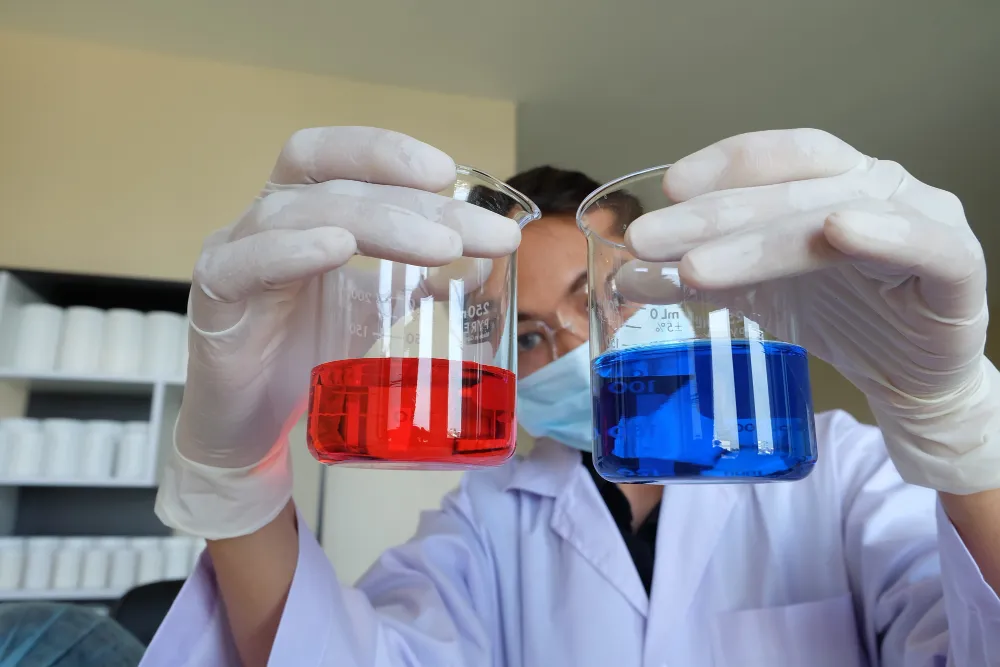
Over 100 million metric tons of industrial alcohols are consumed by the global industry each year. A wrong choice can spoil your chemical mix! It can also damage expensive processing equipment.
In factories, comparing methanol vs ethanol is a vital task. Each alcohol behaves differently under normal working conditions. For example, the United Arab Emirates has seen a big rise in local chemical manufacturing. In this region, picking the right raw material directly impacts your daily production costs. It also affects your workplace safety standards.
Understanding the unique traits of each alcohol ethanol and methanol keeps your plant running well. It helps you meet environmental rules without losing money.
What is the Chemical Difference Between Methanol and Ethanol?
The biggest difference between methanol and ethanol is the level of carbon. Methanol is a simple alcohol. It is made up of one carbon atom, which is shown in its chemical formula $CH_3OH$. On the other hand, ethanol has two carbon atoms. The chemical formula for ethanol is $C_2H5OH$.
This extra carbon atom changes how these liquids behave. This small difference makes them have different boiling points. They also have different evaporation rates and drying times. Methanol boils at 64.771, while ethanol boils at 78.37°C.
Why Knowing the Difference Between Matters for Safety
Industrial plants must study the difference to protect workers. While both liquids are clear and look the same, their toxic levels are not equal.
Methanol is highly toxic. If it touches skin, or if it is inhaled or swallowed, it can cause severe neurological damage. It can also cause permanent blindness. Ethanol is not so scary. This is why it is in hand sanitizers, cosmetics, and other products you use every day.
In factories, safety teams must use different airflow and safety gear for each chemical. Methanol requires airtight systems. You need special monitors because its fumes are very dangerous. Ethanol is still highly flammable. Still, it does not carry the same immediate poison risks during daily use.
Understanding Alcohol Ethanol and Methanol in Fuel Production
Energy companies use both alcohol ethanol and methanol as alternative fuels. However, they serve different parts of the energy sector. Their burn rates and energy outputs vary because of their molecular setups.
- Methanol as fuel: Methanol is used to produce biodiesel by transesterification. Methanol is also used as a high-octane fuel in race cars because of its resistance to engine knock.
- Ethanol as fuel: The compound is blended with regular gasoline to reduce emissions from cars. Most gas stations sell fuel blends with some predetermined amount of plant-derived ethanol.
Key Properties: Methanol vs Ethanol Compared
Industrial buyers must compare methanol vs ethanol, and how they behave under different heat and physical conditions.
1. Boiling Points and Vapor Pressure
Methanol dries much faster than ethanol at room temperature. This fast drying makes methanol useful in quick-dry paints and metal coatings. However, this fast evaporation means it creates catch-fire fumes very quickly. You will need strong fan systems to keep the air safe.
2. Solvency Power
Both are great solvents, but they dissolve different things. Methanol is highly polar. This makes it perfect for making plastics and cleaning computer chips. Ethanol is less polar. This makes it great for preserving perfumes, mixing oils, and making medicine.
Core Industrial Applications of Methanol
Methanol is used in making chemicals. Many factories use a lot of it, millions of tons each year, to make products.
Formaldehyde Production: A lot of methanol, over 40%, is used to make formaldehyde. This chemical helps make glue and wood boards that are used to build homes with methanol.
Wastewater Treatment: Water treatment plants use methanol to help good bacteria grow. These bacteria sewage water by changing bad nitrates into safe nitrogen gas with the help of methanol.
Core Industrial Applications of Ethanol
Ethanol is a very important compound that is low in toxicity.
Manufacturing of Medicines: Ethyl alcohol is employed by pharmaceutical companies as a solvent to dissolve the drug components. It can also be found in liquid drugs, as it dissolves the drug in the form of a solution, and the latter is swallowed.
Cosmetics and Personal Care: This compound of alcohol serves as the basic material in the manufacture of fragrant cosmetics and hairsprays. Ethanol leaves very minimal traces, which disappear as the substance dries on the skin, and does not cause any sticky residue.
Industrial Use of Sanitizer: When ethanol is used as an antiseptic, it breaks down the walls of the cell and therefore kills the microbes in the environment very effectively. On account of this property of ethanol, it is mostly used in products such as hospital wipes and hand sanitisers.
How to Select the Right Industrial Alcohol for Your Plant
To choose the right product, you must look at your end use. You must also check worker safety gear and your budget.
Evaluate Your Solvent Needs
If your project requires fast drying, methanol is the best choice. It is also the most cost-effective option for industrial inks. If your product touches human skin, you must use ethanol. This keeps you in line with health and safety laws.
Compare Regulatory Costs
Handling methanol requires expensive permits. You need constant air testing and sealed tanks to stop leaks. Ethanol is safer to store. However, it often has high taxes unless you buy “denatured” ethanol.
If you want to buy high-quality chemical solvents in bulk, working with a reliable methanol supplier in UAE ensures you get pure products.
Conclusion
Knowing the traits of methanol vs ethanol is vital for running a safe factory. Methanol is the best choice for chemical making, heavy cleaning, and formaldehyde. Ethanol is the standard for medicine, skin care, and fuel mixes.
Picking the right raw material prevents errors and keeps your plant running. For good chemical supply and pure solvents, Chemway Chemicals provides quality products made for your business.
Frequently Asked Questions
1. What is the main difference between methanol vs ethanol in industrial use?
The main difference when comparing methanol vs ethanol is their chemical structure. This structure determines their safety level and daily industrial use. Methanol has one carbon atom ($CH_3OH$) and is highly toxic. It works best for raw chemical processing. Ethanol has two carbon atoms ($C_2H_5OH$) and is much safer for products that people touch.
2. Can we use alcohol ethanol and methanol interchangeably as solvents?
No, you cannot swap these chemicals. These chemicals have different boiling points they have different polarity levels, and different drying times. If you swap these chemicals, it can ruin the chemical mixes. It can even cause fires with these chemicals.
3. Why does the difference between methanol and ethanol affect fuel blending?
Ethanol can be readily mixed with gasoline for regular cars. Methanol, on the other hand, can be utilized in racing fuel or alternatively transformed into biodiesel because it combusts in a different way and also has a lower energy content.
4. What is the better choice in terms of price for large-scale industrial cleaning?
Methanol is usually cheaper to buy in bulk. On the other hand, they have to get additional safety equipment to make sure that staff are properly equipped to handle this potentially dangerous material.
5. How should factories store these two alcohols in a safe way?
Keep them both in cold, airy places away from any source of heat. Methanol also requires an additional warning label and a tightly sealed tank to minimize the risk of skin contact and inhalation of the fumes.
