
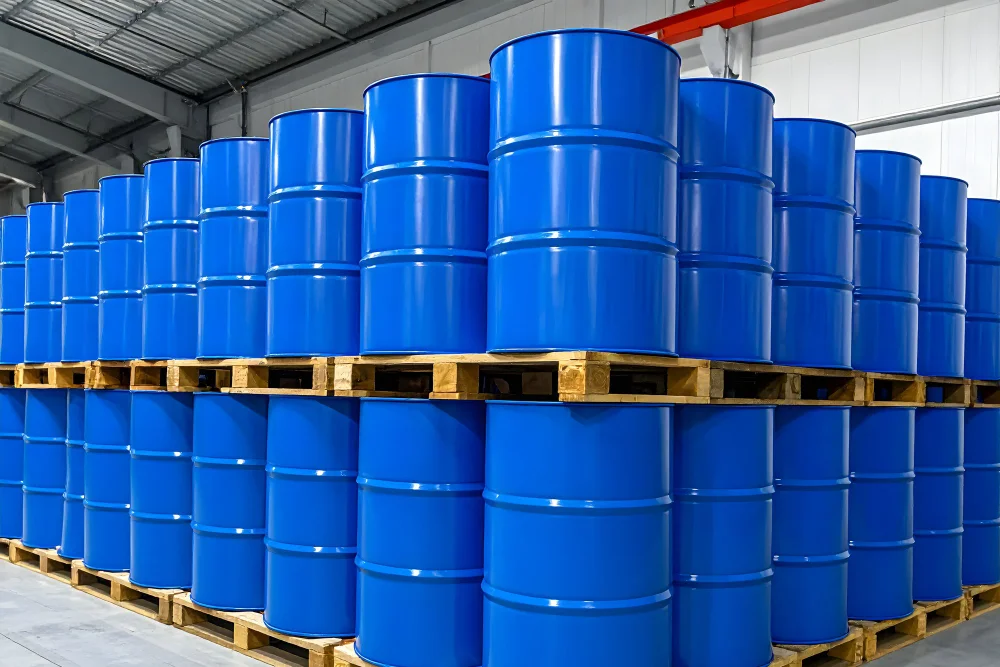
Safe ethylene glycol storage comes down to a few core principles: keep the liquid in suitable, closed and clearly labelled containers, store it in a dry, ventilated area away from incompatible chemicals such as strong oxidants, strong acids and strong bases, and follow the safety data sheet (SDS) for the specific product you have. Good handling habits, the right protective equipment and a clear spill plan complete the picture.
This guide explains each of these areas in practical terms. It covers general guidance only, so always check the SDS from your supplier and any local requirements that apply to your site.
What Is Ethylene Glycol?
Ethylene glycol, also known as monoethylene glycol or MEG, is a colourless, odourless and viscous liquid. It is widely used in antifreeze and coolant formulations, heat transfer fluids and as a raw material in the production of polyester fibres and resins.
It is also hygroscopic, which means it absorbs moisture from the air. This is one reason storage conditions matter, as moisture uptake can affect product quality in some applications.
Why Proper Ethylene Glycol Storage Matters
Ethylene glycol is harmful if swallowed and can cause damage to the kidneys and central nervous system. Because it is colourless and odourless, a leak or a wrongly labelled container may not be obvious.
Proper ethylene glycol storage helps to:
- Protect workers from accidental exposure
- Prevent reactions with incompatible chemicals
- Keep the product free from moisture and contamination
- Reduce the risk of leaks reaching drains or soil
- Make spills easier to contain and clean up
Ethylene Glycol Storage Requirements

The exact ethylene glycol storage requirements for your site depend on the product grade, quantity, container type and local regulations. The points below reflect widely published safety guidance.
Keep It Away from Incompatible Chemicals
Ethylene glycol reacts with strong oxidants, strong acids and strong bases. Store it separately from these materials to avoid unwanted reactions.
The ILO and WHO International Chemical Safety Card for ethylene glycol lists this separation as a storage precaution.
The same card also advises storing the substance dry and providing ventilation along the floor.
Use Suitable, Closed Containers
Keep ethylene glycol in containers that are suitable for the product and kept closed when not in use. Closed containers help limit moisture uptake and contamination. Check the SDS or ask your supplier about compatible container and seal materials for your grade.
Choose a Dry, Well-Ventilated Area
Store containers in a dry area with suitable ventilation. Keep the area tidy, clearly marked and away from routes where containers could be damaged by vehicles or equipment.
Plan for Leaks and Containment
Think about what would happen if a container leaked. Many sites use secondary containment, such as bunded areas or spill pallets, to stop leaks spreading to drains or soil. Check what your local authority and site permits require.
Safety Precautions During Handling
Exposure risks often arise during handling, such as when transferring, decanting or dispensing the liquid. The table below summarises general precautions. Always check the product SDS for the specific protective equipment and controls required.
| Area | Precaution |
| Fire | No open flames near the product |
| Ventilation | Use ventilation where vapour or mist may build up |
| Skin | Wear protective gloves |
| Eyes | Wear safety goggles |
| Ingestion | Do not eat, drink or smoke during work |
| Transfer | Use suitable pumps or dispensing equipment and avoid splashing |
| Containers | Keep containers closed when not in use and check regularly for leaks |
Train staff on the hazards of ethylene glycol and on the correct use of personal protective equipment (PPE). Only trained people should handle the product.
Spill Response and Accidental Exposure
Have a spill plan in place before you need one. General guidance for ethylene glycol spills includes collecting leaking or spilled liquid in sealable containers as far as possible. Respiratory protection may be needed depending on the airborne concentration, so follow the SDS.
Prevent spilled product from entering drains where possible, and dispose of collected material in line with local waste regulations.
If someone is exposed, follow the first-aid measures in the SDS. Seek medical attention immediately if ethylene glycol is swallowed, even in small amounts.
Labelling, Documentation and Inspection
Good records and routine checks support safe storage over time.
- Labelling: Make sure every container is clearly labelled with the product name and hazard information. Never store ethylene glycol in unmarked or food and drink containers.
- Documentation: Keep the current SDS accessible to everyone who handles the product.
- Access control: Limit access to the storage area to trained personnel.
- Inspection: Regularly check containers, valves and fittings for leaks, damage or corrosion, and keep spill kits stocked.
Sourcing Ethylene Glycol Responsibly
Safe storage starts with the right product and the right information. When buying, ask for the product’s SDS and any storage and handling recommendations for that specific grade.
If you are looking for a mono ethylene glycol supplier in uae, request the SDS and confirm the packaging type before delivery.
For product enquiries, you can contact Chemway chemicals.
Conclusion
Effective ethylene glycol storage relies on simple, consistent practices: separating it from incompatible chemicals, keeping it dry and ventilated, using closed and labelled containers, planning for spills and training staff. Since requirements vary by product grade and location, always follow the supplier’s SDS and the local rules that apply to your facility.
Frequently Asked Questions
1. What is the most important rule for ethylene glycol storage?
Keep ethylene glycol separated from strong oxidants, strong acids and strong bases, because it can react with them. Store it in closed, labelled containers in a dry, ventilated area, and follow the SDS for your product.
2. What are the basic ethylene glycol storage requirements?
The basics are suitable closed containers, clear labelling, a dry and ventilated area, separation from incompatible chemicals and a plan for leaks. Exact needs depend on product grade, quantity and local regulations, so check the SDS.
3. What PPE is needed when handling ethylene glycol?
General guidance recommends protective gloves and safety goggles, with ventilation where vapour or mist may form. The required PPE can vary by task and product, so always confirm the specific equipment listed in the supplier’s SDS.
4. How should an ethylene glycol spill be handled?
Collect the spilled liquid in sealable containers as far as possible, and wear the protective equipment listed in the SDS. Prevent it from entering drains, and dispose of collected material according to local waste rules.
5. Why does ethylene glycol need to be stored dry?
Ethylene glycol is hygroscopic, so it absorbs moisture from the air. Storing it dry in closed containers helps protect product quality and limit contamination, which can matter in some industrial uses. Always check the SDS.
