
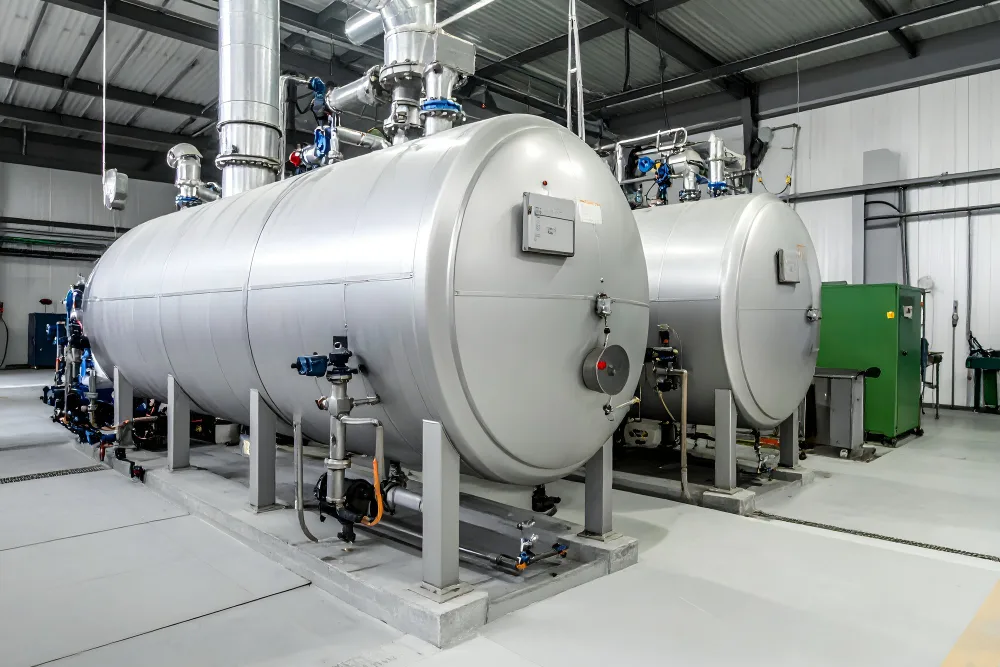
Why do boilers fail even when the water looks perfectly clean? Often the cause is dissolved oxygen, a gas you can’t see. Good boiler feed water treatment removes oxygen from the feed water, using a deaerator and an oxygen scavenger, before it can eat into steel tubes. In the UAE, plants run long hours in extreme heat, so even a small oxygen leak can become costly pitting, leaks and shutdowns.
At Chemway Chemicals, we work with industrial customers on exactly these problems, so this guide explains what to control, why it matters and how to do it.
What Is Boiler Feed Water Treatment, and Why Does It Matter in the UAE?
Boiler feed water treatment prepares the water that enters your boiler so it doesn’t cause corrosion, scale, or carryover. It usually has two stages:
- External treatment: filtration, softening, reverse osmosis and deaeration, done before the water reaches the boiler.
- Internal treatment: chemical dosing inside the feed system and boiler to catch what remains.
In the UAE, many plants rely on treated municipal, desalinated or brackish sources, and boilers often run at high load for long periods. Feedwater quality can vary, so a steady program protects both efficiency and uptime. Done well, it helps you:
- Reduce fuel consumption
- Extend tube and economizer life
- Avoid unplanned shutdowns
- Keep steam quality stable
Why Is Dissolved Oxygen in Boiler Feed Water So Harmful?
Dissolved oxygen in boiler feed water is dangerous because heat drives it out of the water and onto metal surfaces. Mild steel reacts with it quickly, causing pitting: small, deep holes that can break through a tube wall even when overall metal loss looks minor.
Where the damage shows up
| Area | What oxygen does | Typical result |
| Feed water piping | Rust and pitting | Iron carried into the boiler |
| Economizer | Localized pitting | Leaks and tube failure |
| Boiler tubes | Pits under deposits | Shorter life, downtime |
| Condensate lines | Corrosion, worse with CO₂ | Contaminated return water |
Corrosion products also settle on heat-transfer surfaces. That hurts efficiency and makes hot spots more likely. Oxygen damage also continues while a boiler sits idle, especially if it is refilled with cold, untreated water.
How Does Oxygen Get Into Boiler Feed Water?
Oxygen is rarely added on purpose. It sneaks in through everyday weak points:
- Make-up water: it is usually saturated with air.
- Condensate system leaks: air can be drawn in through leaks, especially on vacuum sections.
- Pump seals and open tanks: both give air a way into the water.
- Standby and layup periods: idle boilers filled with cold, untreated water take in a lot of oxygen.
Knowing the entry points helps you fix the cause instead of only treating the symptom.
How Do You Control Dissolved Oxygen in Boiler Feed Water?
The most reliable approach uses two steps: remove most of the oxygen mechanically, then chemically remove what is left.
Step 1: Mechanical deaeration
A deaerator heats the feed water with steam and strips out dissolved gases. A well-run unit brings oxygen down to a few parts per billion. Many systems target roughly 7 ppb (0.007 mg/L) or lower, but the exact limit depends on your boiler pressure and the manufacturer’s guidance.
Step 2: Chemical oxygen scavenging
Oxygen scavengers react with the remaining oxygen so it can’t reach the metal. These are among the most important boiler feed water chemicals in any program.
| Scavenger type | How it works | Good to know |
| Sodium sulfite | Reacts with oxygen to form sulfate | Common in low-pressure boilers; adds dissolved solids |
| Catalyzed sulfite | Same reaction, but faster | Useful where contact time is short |
| DEHA or carbohydrazide-based | Reacts with oxygen and helps protect metal surfaces | Adds no solids; suited to higher-pressure systems |
The right choice depends on pressure, temperature and feed water quality. To see how these chemicals perform in real plants, read our guide on oxygen scavengers in industrial applications.
What Should You Look for in an Oxygen Scavenger Supplier in the UAE?
The wrong product, or the wrong dose, can leave your boiler exposed even when the program looks fine on paper. When comparing an oxygen scavenger supplier in the UAE, check these points:
- Fit for your system: the product should match your boiler pressure, type and feed water quality.
- Technical support: look for clear dosing guidance and help with troubleshooting.
- Consistent quality: ask for safety data sheets and product documentation.
- Local availability: reliable supply and delivery keep your program from running dry.
- Compatibility: the scavenger must work alongside your other treatment chemicals.
Chemway Chemicals is an engineering manufacturer focused on high-quality products, services and solutions for industry. If you are looking for an oxygen scavenger supplier in the UAE, our team can help you match a product and dosing plan to your system.
How Can You Monitor Oxygen Control Day to Day?
Even the best chemistry fails without routine checks. A simple routine goes a long way:
- Test dissolved oxygen at the deaerator outlet or economizer inlet.
- Check scavenger residual at the intervals your treatment program recommends.
- Keep pH and alkalinity within your boiler manufacturer’s limits.
- Inspect deaerator vents, pump seals and condensate lines for air leaks.
- Protect idle boilers with a proper layup procedure.
Technical organizations such as ASHRAE publish guidance on boiler and hydronic system care that can support your maintenance planning. Always follow your boiler manufacturer’s limits for your specific equipment.
Conclusion
Dissolved oxygen is a small number on a test report, but it can cause serious damage. Strong boiler feed water treatment combines mechanical deaeration, the right oxygen scavenger, steady monitoring and good layup habits. In the UAE’s demanding conditions, that combination protects your equipment, your fuel budget and your uptime. If you want to review your current program, Chemway Chemicals is ready to help.
Frequently Asked Questions
1. What chemical is used to remove oxygen from boiler feed water?
Oxygen scavengers do this job. Sodium sulfite and catalyzed sulfite are common in lower-pressure boilers, while DEHA or carbohydrazide-based products are often used where solids-free treatment is preferred. The right choice depends on your boiler pressure and water quality.
2. What is the acceptable dissolved oxygen level in boiler feed water?
It depends on boiler pressure and design. Many systems aim for about 7 ppb (0.007 mg/L) or lower after the deaerator. Always confirm the limit with your boiler manufacturer and water treatment specialist.
3. What are boiler feed water chemicals?
They are the chemicals added to feed water or boiler water to control corrosion and scale. The main groups are oxygen scavengers, scale and sludge conditioners, and pH or alkalinity builders. Together, they protect the boiler and keep steam quality stable.
4. Why is boiler feed water treatment important?
Untreated water causes scale, corrosion and carryover. These problems reduce efficiency, raise fuel costs and shorten equipment life. Proper treatment keeps the boiler safe and reliable, and it helps avoid unplanned shutdowns.
5. How do I choose an oxygen scavenger supplier in the UAE?
Look for a supplier that understands your boiler type and pressure, provides technical support, shares product documentation and delivers reliably. Chemway Chemicals can recommend a suitable scavenger and dosing approach for your plant.
